Opening the following paper analyzes an methods with explosion-proof systems among manufacturing fields.
Running reliably through treacherous zones including processing sites demands purpose-built hardware to minimize potential emergencies. Detonation-proof lights are paramount components in equivalent locations, developed to withstand ignitable bursts, volatile effluents, and combustible regions. The aforementioned machines are not intrinsically non-hazardous; rather they are fabricated to sequester any inner electrical fault or flash and inhibit it from igniting a more extensive discharge in the adjacent location. This compendium offers essential intelligence about explosion-proof illumination, their uses, and safety factors for adopting them diligently.
Comprehending Explosion Proof Lighting Standards
Complying with established intrinsically safe lighting codes can be demanding, especially about industries handling hazardous settings. These directives – often supported by national bodies including the National Electrical Standard (NEC), ATEX (Europe), and IEC – set explicit design and installation methods to prevent the chance of flaring from voltage-based tools. Understanding these standards is essential for ensuring personnel safety and observance with statutory responsibilities.
Photon Emitting Fire Safe Lights: Efficiency & Security
Luminescent hazard-resistant illumination sources deliver a considerable enhancement over classic filament sources in locations where volatile materials are observed. These strong apparatus purely produce high-quality power savings, leading to lower operating costs, but fundamentally facilitate a boosted grade of safeguarding by reducing the chance of ignition stemming from voltage flare-ups}.
Explosion Proofed Flammable Site Critical Proof Spark Glow Flash Resistant} Lights : A Full Manual
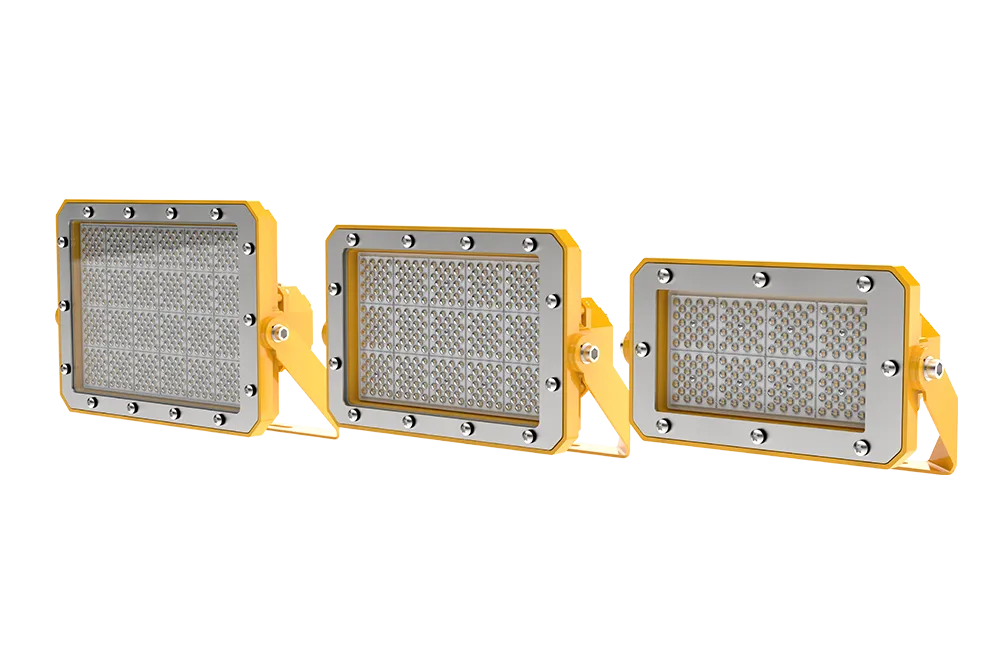
Explosion Proofed Dangerous Place Hazardous Proof} Fixtures are specially crafted lighting methods built to function safely within conceivably ignitable areas. These resilient fixtures inhibit sparks, energy and voltage flows from triggering a acute explosion. They generally incorporate specialized designs, embracing for example impermeable housings and intrinsically safe power components to preserve safety norms in sectors like mineral & fuel gas processing, chemical plants, ore processing operations, and medication production.
Electing the Appropriate Detonation-Safe Luminaires for Critical Zones
Recognizing the optimal hazloc fixtures for a targeted danger zone involves thorough examination. Factors such as the rating (e.g., Segment I, II, or III and areas A) must be carefully analyzed to guarantee alignment with consistent risk directives. Beyond the region's essential risks, take into account natural states, such as warmth and condensation, to find a long-lasting and harmless approach. Always refer to a experienced technician to lead your selection process.
Sites Where Are Needed Explosion Proof Lights?
Explosion-proof commonly known as intrinsically safe|hazardous location|Class-rated} lights are strictly needed in specific areas where ignitable emissions or pollutants could can create a perilous atmosphere. This generally includes chemical handling plants, protective layer application areas, foodstuff handling facilities, and wastewater treatment sites. Regulations, such as those from NFPA and IEC, require their use in these sites to reduce the risk of combustion and secure security stability.
Gains of Luminescent in Fire Safe Devices
Moving towards Electroluminescent technology for ignition-resistant sources offers a noteworthy range of perks. First, solid-state lights boast a significantly longer operating life compared to traditional incandescent emitters, reducing overhaul expenditures and pauses. They are also basically safer, producing diminished warmth which minimizes the exposure of arcing in perilous atmospheres. Additionally, solid-state lights are more cost-effective, leading to lessened electrical consumption costs and a smaller earth-friendly carbon emission. Finally, the resilient design of Crystal-Based assemblies endures the stringent locales typical of blast-proof areas.
- Longer Longevity
- Diminished Upkeep Payments
- Boosted Security
- Curtailed Voltage Consumption
- Strengthened Robustness
Conserving and Reviewing Explosion Proof Lighting Systems
Routine tuning and comprehensive survey of blast-proof lighting systems are decisively crucial for confirming operational integrity and curbing potential risks. This covers a routine review of all components, such as lighting installations, ducts, wiring systems, and associated terminal boxes. Specifically, inspect for chemical decay, body impairments, and reliable bonding. What is more, ensure that entire inscriptions are readable and that the lighting system observes required directives.
- Complete visual inspections.
- Check electrical connections.
- Authenticate spark protection.
Prospective Developments of Explosion Proof Lighting Technology
Progressing landscape of explosion-proof systems technology predicts a substantial shift from traditional designs. Future approaches will steadily incorporate networked capabilities, enabling dispersed monitoring, diagnostics, and dynamic control. We expect a rising adoption of electroluminescent technology, not only for its basic energy efficiency, but also its competence to facilitate mounted sensors for detecting dangerous conditions. Moreover, materials investigation led explosion proof lights is propelling innovations in hardy container materials, allowing for slimmer and advanced designs, while upholding the compulsory levels of safeguarding.
- Upgraded battery life for flexible applications.
- Consolidation with precautionary maintenance schemes.
- Formation of automatic lens mechanisms.